
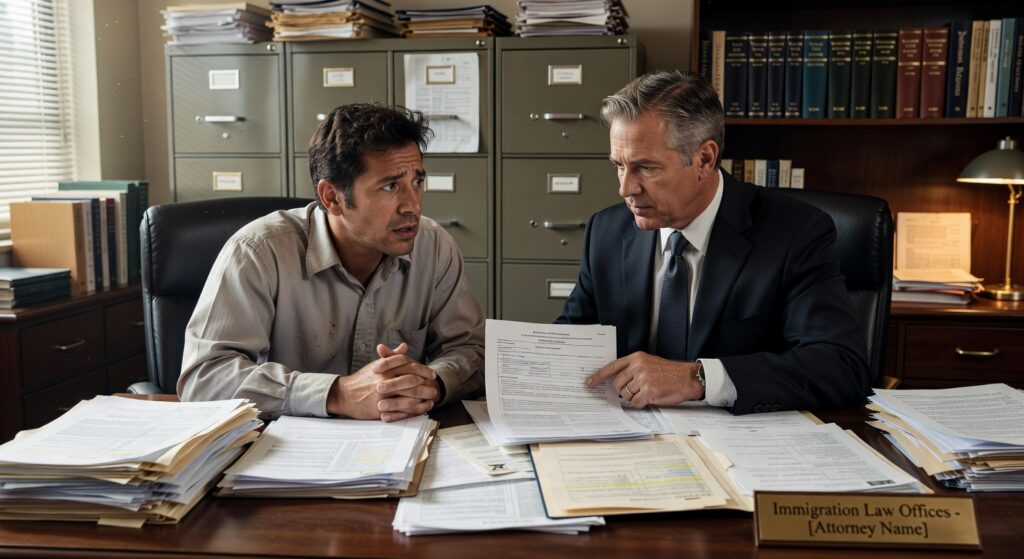
When an immigration lawyer looks at a green card case for the first time, they’re not reading every page word for word. They’re scanning for a handful of specific signals, the kind of details that can mean the difference between a smooth approval and a Request for Evidence (RFE) months later.
Most applicants spend weeks gathering documents without knowing what a trained eye is actually looking for. This article breaks down the lawyer evaluation framework, what gets checked first, the hidden red flags that quietly weaken a case, and what you can do before you file to make sure your application holds up.
This article is for general informational purposes and does not constitute legal advice. Every case has its own facts, and a quick read-through is never a substitute for a full review.
Why the First 10 Minutes of a Case Review Matter
An experienced immigration lawyer can often tell within minutes whether a case is straightforward or whether it’s going to need extra work. That’s not guesswork, it’s pattern recognition built from reviewing thousands of petitions and watching which ones sail through USCIS and which ones stall.
This first pass isn’t about reading every form line by line. It’s a structured scan designed to catch the issues that USCIS adjudicators themselves are trained to flag. If you know what that scan looks for, you can address problems before they ever reach an officer’s desk, which is exactly the value of having someone review your case before you submit it.
The Lawyer Evaluation Framework: What Gets Checked First
Every case review tends to follow a similar sequence, regardless of the green card category. Here’s roughly what an attorney is checking, in order:
- Eligibility category fit — Does the case actually match the path being filed (marriage-based, family-based, employment-based, etc.), or is there a mismatch between the facts and the form?
- Timeline consistency — Do the dates across forms, supporting letters, and evidence line up? Gaps or contradictions here are one of the fastest ways to trigger questions.
- Relationship or employment evidence strength — For marriage cases, is there a credible paper trail of a shared life? For employment cases, does the job offer and qualifications match what’s claimed?
- Prior immigration history — Any past overstays, denials, or status violations that need to be addressed head-on rather than left unmentioned.
- Form-to-form alignment — Names, addresses, and dates need to match exactly across every document in the packet. Small clerical mismatches are far more common and more disruptive than people expect.
If you want a sense of where your own case stands before you file, our guide on how to know if your green card case is strong before filing walks through the same self-check process in more detail.
Hidden Red Flags Most Applicants Never Catch
Once the basics check out, an attorney’s attention shifts to the subtler issues, the ones that don’t jump off the page but tend to be exactly what USCIS notices.
Documentation Gaps
Missing evidence is the most common and most fixable problem. This usually isn’t about missing an entire form; it’s about thin support for a specific claim. A marriage-based case might have a marriage certificate and a lease, but nothing showing financial entanglement. An employment-based case might have a job offer letter but no clear evidence that the underlying role qualifies for the category being filed. These gaps don’t necessarily sink a case, but they’re exactly the kind of thing that turns into a Request for Evidence if they’re not addressed up front.
Credibility Inconsistencies
These are the details that don’t disqualify a case on their own, but that an adjudicator may flag as worth a closer look: a discrepancy between an address on one form and a different address on a supporting document, a timeline that doesn’t quite add up, or inconsistent answers across different parts of the same petition. None of these means something is wrong. But USCIS is trained to notice them, and unexplained inconsistencies almost always generate a follow-up question. Every case is different; speaking with an immigration attorney can help you understand which inconsistencies in your specific file are worth addressing before submission and which are simply a non-issue.
If you’re unsure how thorough USCIS’s own review process actually is, our breakdown of how USCIS verifies information in your green card application shows exactly what’s being cross-checked behind the scenes.
What This Means for Your Green Card Case
None of this is meant to make the process feel intimidating; it’s meant to show that most of what trips up a case is preventable. The applicants who run into delays are rarely the ones with genuinely ineligible cases. They’re usually the ones who didn’t know what to look for before they filed.
That’s the real value of a professional case review: it’s not just a second pair of eyes, it’s a second pair of eyes trained to catch the exact things that cause delays. Whether you’re filing through marriage, through a family member, or through an employer, the underlying review process is similar: confirm eligibility, check consistency, and shore up thin evidence before USCIS ever sees the file.
If you’re preparing a spousal petition, our Marriage Green Card services page outlines how this kind of review fits into the full filing process. And if your case is already in the adjustment of status stage, our Adjustment of Status services page covers what attorney support looks like at that point in the journey.
Key Takeaways
- Immigration lawyers scan cases for a consistent set of signals: eligibility fit, timeline consistency, evidence strength, immigration history, and form-to-form alignment.
- Documentation gaps are the most common and most fixable issue, often involving thin evidence rather than missing forms entirely.
- Credibility inconsistencies (mismatched dates, addresses, or details) don’t automatically hurt a case, but they tend to invite extra scrutiny from USCIS.
- Most processing delays come from preventable issues, not from genuinely ineligible cases.
- A professional case review before filing is designed to catch these issues while there’s still time to fix them.
Frequently Asked Questions
Can a lawyer really tell if my case has problems in just 10 minutes?
An experienced attorney can usually identify the major red flags quickly because they’re looking for a known set of patterns. A full, in-depth review still takes longer, but the initial scan is often enough to flag where attention is needed.
What’s the difference between a documentation gap and a credibility inconsistency?
A documentation gap means there isn’t enough evidence supporting a claim. A credibility inconsistency means the evidence you do have doesn’t quite line up, with different dates, addresses, or details across forms. Both can raise questions, but they’re addressed differently.
Does having a red flag mean my case will be denied?
Not necessarily. Many red flags are easily explained or corrected once identified. The risk comes from red flags that go unaddressed and surface for the first time when USCIS notices them. These requirements may change. Always verify current rules at USCIS.gov or with your attorney.
Should I get a case review even if I think my application is strong?
Yes, many applicants who believe their case is straightforward are surprised by what a trained review uncovers. A review isn’t a sign your case is weak; it’s a way to confirm it’s as strong as you think it is.
How long does a professional case review take?
This varies by case complexity, but most reviews can be completed well before your filing deadline if you start early. The sooner you have your case reviewed, the more time you have to fix anything that comes up.
Get a Professional Case Review Before You File
You only get one shot at a clean first filing. Before you submit your green card application, find out exactly what an experienced eye would catch, and fix it while you still have time.
Book a free consultation with Your Green Card Lawyer and let our team walk through your case with you.
Browse more guides in Tips, Guides & Resources or visit our Contact Us page to get started.
Green cards, it’s all we do.
