
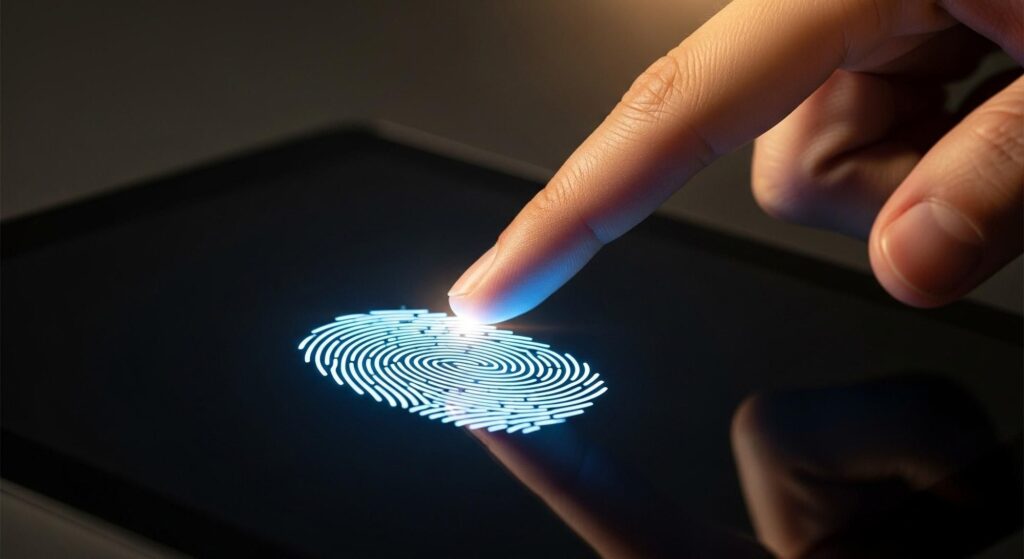
Applicants who file Form I-485 (Application to Register Permanent Residence or Adjust Status) are usually required to attend a USCIS biometrics appointment. This appointment allows the government to collect fingerprints, photographs, and a digital signature used to verify identity and conduct background checks before a green card decision is made.
The biometrics step does not determine whether the green card will be approved. It is a security and identity verification requirement in the adjustment of status process.
This guide explains what biometrics is, what your ASC notice means, what to bring to the appointment, what USCIS checks, and what happens after the appointment.
What Biometrics Means for an I-485 Application
Biometrics refers to biological identifiers used to confirm identity during immigration processing.
For adjustment of status applicants, USCIS collects three main types of biometric data:
- Fingerprints
- Digital photograph
- Electronic signature
These identifiers are captured at a USCIS Application Support Center (ASC) and used to conduct criminal and security background checks through federal databases.
The biometric signature also confirms that the information submitted in the immigration application is true and correct under penalty of perjury.
Biometrics collection is a standard step for many immigration benefits, including green cards, work permits, travel documents, and naturalization applications.
When the I-485 Biometrics Appointment Is Scheduled
After USCIS receives an adjustment of status application package, the agency reviews the filing and schedules a biometrics appointment if required.
In most cases:
- The appointment notice arrives about 3–8 weeks after filing.
- USCIS sends the notice by mail or through the online USCIS account.
- The appointment location is typically the nearest Application Support Center to the applicant’s address.
Applicants cannot choose their own appointment time or location. USCIS assigns the appointment automatically.
Understanding the ASC Biometrics Appointment Notice
The biometrics appointment notice is issued as Form I-797C, Notice of Action.
This notice contains several important details:
- Appointment date and time
USCIS assigns a specific time slot. Applicants are expected to appear exactly as scheduled.
- Location of the Application Support Center (ASC)
The notice lists the facility address where biometrics will be collected.
- Case information
The notice may include the receipt numbers for applications connected to the appointment, such as:
- I-485 (adjustment of status)
- I-765 (employment authorization)
- I-131 (advance parole)
This often occurs when applicants file Form I-130 and Form I-485 together as part of a concurrent filing strategy.
- Biometrics code
Some notices include a code indicating what type of biometrics will be collected.
Applicants should review the notice carefully and follow all instructions printed on the document.
Where the Biometrics Appointment Takes Place
Biometrics appointments occur at USCIS Application Support Centers (ASCs).
ASCs are government facilities that collect biometric information for immigration benefits. These centers do not process applications or provide case decisions. Their only role is to collect biometric data.
At the ASC, USCIS officers capture fingerprints, a photograph, and a digital signature using electronic equipment designed for biometric collection.
What to Bring to the Biometrics Appointment
USCIS requires applicants to bring specific documents to the ASC.
Required items
Biometrics appointment notice (Form I-797C)
The notice confirms the scheduled appointment and allows staff to locate the case.
Valid photo identification
Acceptable identification typically includes:
Passport
Permanent resident card (if replacing or renewing).
Driver’s license
State-issued identification card.
Applicants should bring unexpired identification whenever possible.
Additional items that may be useful
Some applicants also bring:
A copy of their immigration application.
Previous immigration documents.
Any document specifically requested in the notice.
However, most biometrics appointments require only notice and identification.
Note;
Applicants should always review the appointment notice carefully and ensure they bring the required identification documents. This step is part of preparing the complete set of documents required for a green card application.
What Happens During the USCIS Fingerprint Appointment
The biometrics appointment itself is straightforward and usually short.
Check-in
When applicants arrive at the ASC:
Staff verifies the appointment notice.
Identification is checked.
The applicant is called when it is their turn.
Biometric collection
During the appointment, USCIS officers will:
Scan all fingerprints electronically.
Take a digital photograph.
Capture a digital signature.
The digital signature confirms that the information provided in the application remains accurate.
The fingerprinting process itself typically takes only a few minutes, although the full appointment may take around 20–30 minutes, depending on the office workload.
Before leaving, staff usually stamp the appointment notice to confirm attendance.
What USCIS Checks After Biometrics
Once biometrics are collected, USCIS uses the information to perform several security checks.
FBI fingerprint check
Fingerprints are sent to the FBI to identify:
Criminal records
Prior immigration violations
Identity matches in federal databases
Immigration history review
USCIS also verifies:
Prior immigration applications
Previous biometric records
Identity consistency across filings
Security screening
Biometric information may also be compared against national security databases.
These checks allow USCIS to confirm that the applicant is eligible for immigration benefits and does not present security concerns.
What Happens After the Biometrics Appointment
Once biometrics are completed, USCIS continues to review the application and conduct background checks as part of the overall green card application timeline, before scheduling interviews or issuing further notices.
Typical next steps include:
- Case status update
USCIS may update the online case status to show that fingerprints were taken.
- Background checks
Security checks continue while the application remains pending.
- Interview scheduling (if required)
Many I-485 applicants must attend an adjustment of status interview.
- Additional requests
USCIS may issue a Request for Evidence (RFE) if more documents are required.
Processing times vary widely depending on the case type and workload at USCIS field offices.
Rescheduling a Biometrics Appointment
Applicants who cannot attend their scheduled appointment must request rescheduling.
USCIS requires that rescheduling requests:
- Be submitted before the appointment date
- Provide a valid reason for the change
Requests can be made through the USCIS online account or the USCIS Contact Center.
If the request is approved, USCIS will issue a new appointment notice with a different date.
What Happens if the Biometrics Appointment Is Missed
Failure to attend the scheduled biometrics appointment can have serious consequences.
If an applicant does not appear and does not properly request rescheduling, USCIS may treat the application as abandoned and deny the case.
Because of this, applicants should ensure that:
- Their mailing address with USCIS is current.
- Appointment notices are reviewed immediately.
- Rescheduling requests are submitted in advance when necessary.
Important Notes for 2026 Applicants
Several operational factors continue to affect biometrics scheduling in 2026.
Appointment availability
USCIS schedules biometrics appointments based on the workload of local Application Support Centers.
Address accuracy
If an applicant moves after filing Form I-485, USCIS must be notified. Failure to update the address may cause appointment notices to be sent to the wrong location.
Rescheduling requirements
USCIS increasingly requires applicants to submit rescheduling requests through their online USCIS account rather than by mail.
Applicants should regularly check their online account for updates or digital copies of appointment notices.
I-485 Biometrics Appointment Checklist
Before attending a USCIS fingerprint appointment, confirm the following:
- Biometrics appointment notice (Form I-797C).
- Valid photo identification.
- Arrival at least 15 minutes early.
- Review of application information before signing.
- Address information updated with USCIS.
Keeping these items ready helps ensure the appointment proceeds without delays.
Frequently Asked Questions
How long does an I-485 biometrics appointment take?
An I-485 biometrics appointment usually takes 15–30 minutes. USCIS collects fingerprints, a digital photo, and a signature at the Application Support Center (ASC), although the actual fingerprinting process itself often takes only a few minutes.
What documents should I bring to my USCIS biometrics appointment for I-485?
Applicants should bring the biometrics appointment notice (Form I-797C) and a valid government-issued photo ID, such as a passport, driver’s license, or state identification card.
What happens after the I-485 biometrics appointment?
After the appointment, USCIS sends the fingerprints for criminal and security background checks. Once these checks are completed, the adjustment of status application continues through normal processing.
Can I reschedule my I-485 biometrics appointment?
Yes. If you cannot attend the scheduled date, you can request rescheduling through your USCIS online account or the USCIS Contact Center before the appointment date.
What happens if I miss my USCIS biometrics appointment?
If you miss the appointment and do not request rescheduling, USCIS may consider the I-485 application abandoned, which can lead to denial of the case.
Where does the USCIS fingerprint appointment take place?
Biometrics appointments are conducted at USCIS Application Support Centers (ASCs) located across the United States, usually the center closest to the applicant’s address.
Is biometrics required for every I-485 applicant?
Most adjustment of status applicants are required to attend a biometrics appointment so USCIS can verify identity and run background and security checks before making a decision on the green card application.
This information is for general educational purposes only and is not legal advice. Reading this page does not create an attorney–client relationship. Immigration laws change frequently, and your situation may require personalized guidance.
