
Trusted immigration legal services for families, couples, and professionals seeking permanent residency in the United States.

How to File Form I-130 for a Spouse (2026 Step-by-Step Guide)
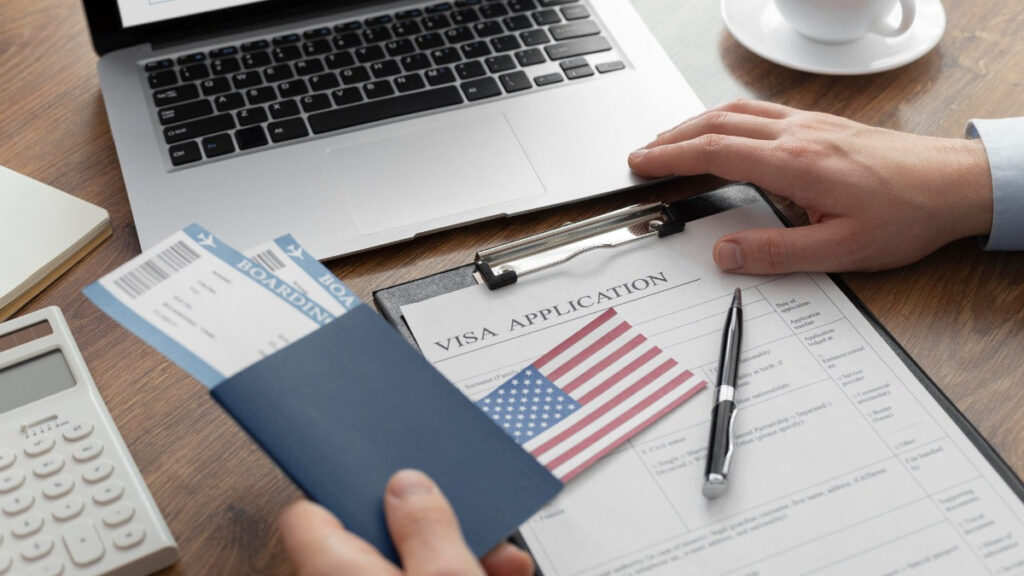
Form I-130, Petition for Alien Relative, is the official document used to establish a qualifying family relationship for immigration purposes. When filing for a spouse, this petition serves as the foundation of a marriage-based green card case.
Approval of Form I-130 confirms that a legally valid marriage exists under U.S. immigration law. It does not grant lawful permanent residence, employment authorization, or immigration status. Additional steps are required before a spouse can receive a green card.
The filing process involves confirming eligibility, completing the correct version of the form, submitting supporting documentation, paying the appropriate government fees, and responding to any follow-up requests from U.S. Citizenship and Immigration Services (USCIS).
This guide explains:
- Who may file Form I-130 for a spouse
- The step-by-step filing process
- The required I-130 checklist and supporting documents
- Filing fee considerations
- Evidence of a bona fide marriage
- Processing timelines in 2026
- Common filing errors
What Form I-130 Does - and What It Does Not Do
Form I-130 establishes the existence of a qualifying marital relationship between:
- A U.S. citizen or lawful permanent resident (petitioner), and
- A foreign national spouse (beneficiary).
Approval of the petition classifies the beneficiary as either:
- An “immediate relative” (if married to a U.S. citizen), or
- A family preference immigrant (if married to a lawful permanent resident).
Form I-130 does not:
- Provide lawful immigration status
- Authorize employment
- Authorize travel
- Prevent accrual of unlawful presence
- Protect against removal proceedings
Following approval, the spouse must complete either:
- Adjustment of Status (Form I-485) if physically present in the United States and eligible, or
- Consular Processing through the National Visa Center and a U.S. embassy or consulate abroad.
Who May File Form I-130 for a Spouse?
U.S. Citizens
A U.S. citizen may file Form I-130 for a legally married spouse. There is no annual visa limit for immediate relatives of U.S. citizens, which generally results in shorter overall processing times compared to preference categories.
Lawful Permanent Residents
A lawful permanent resident may also file Form I-130 for a spouse. However, the spouse is placed in the F2A family preference category. Visa availability depends on the monthly Visa Bulletin issued by the U.S. Department of State.
Individuals Who Cannot File
Form I-130 cannot be filed by:
Individuals without lawful status in the United States
Individuals whose prior I-130 petitions were denied for marriage fraud under INA §204(c)
Petitioners unable to demonstrate a legally valid marriage
The marriage must be legally recognized in the jurisdiction where it occurred.
Step-by-Step Process to File Form I-130 in 2026
Step 1: Confirm Eligibility
Verify:
The petitioner’s immigration status (U.S. citizen or permanent resident).
The legal validity of the marriage.
Termination of all prior marriages.
Absence of statutory bars.
Step 2: Complete Form I-130
Use the current edition of Form I-130 available on the official website of U.S. Citizenship and Immigration Services.
The form requires:
Biographical information for both spouses.
Marriage details.
Prior immigration filings.
Criminal history disclosures.
Address and employment history.
Accuracy is critical. Inconsistencies may result in Requests for Evidence (RFEs) or delays.
Step 3: Gather Supporting Documents (I-130 Checklist)
The petition must include documentary evidence.
Petitioner Documents:
Proof of U.S. citizenship (U.S. passport, birth certificate, naturalization certificate), or
Copy of lawful permanent resident card (front and back)
Beneficiary Documents:
Birth certificate
Passport biographic page
Marriage Documentation:
Marriage certificate
Divorce decrees or death certificates for all prior marriages
All foreign language documents must include certified English translations.
Step 4: Prepare Evidence of a Bona Fide Marriage
USCIS requires evidence that the marriage was entered in good faith and not solely for immigration purposes.
Examples include:
Joint bank account statements.
Joint lease or mortgage.
Utility bills listing both spouses.
Health or auto insurance policies.
Joint tax returns.
Birth certificates of children (if applicable).
Photographs over time.
Travel records.
Affidavits from third parties.
Insufficient documentation is a common cause of RFEs.
Immigration officers evaluate these documents collectively to determine whether the relationship was entered in good faith rather than for immigration purposes.
Step 5: Pay the Filing Fee
The filing fee must match the amount listed on the USCIS website at the time of submission. Fees may differ depending on whether the petition is filed online or by mail.
Payment methods vary depending on filing type.
Always confirm current fees directly with U.S. Citizenship and Immigration Services before submission.
Step 6: Submit the Petition
Form I-130 may be filed:
Online through a USCIS account (if eligible), or
By mail to the appropriate USCIS lockbox facility.
Include all required documentation at the time of filing. Incomplete submissions may be rejected.
Step 7: Receive Receipt Notice
After acceptance, USCIS issues Form I-797, Notice of Action, confirming receipt and assigning a case number.
This receipt does not confer immigration status.
Step 8: Monitor Case Status
Processing times vary depending on:
Petitioner status (citizen vs. permanent resident)
Service center workload
Case complexity
Requests for additional evidence
Processing times vary significantly depending on the service center, workload levels, and case complexity, and the way a petition moves forward is not always linear.
At later stages of the case, additional forms such as the Affidavit of Support (Form I-864) and the required medical examination (Form I-693) must be completed before permanent residence can be granted.
I-130 Processing Timeline (2026 Overview)
While timelines fluctuate, the process typically includes:
- Filing and receipt notice (2–4 weeks)
- Initial review period
- Potential RFE (if applicable)
- Approval notice
After approval:
- Immediate relatives may proceed directly to adjustment or consular processing.
- F2A category applicants must wait for visa availability.
Case-specific factors significantly influence total duration.
Common Mistakes to Avoid When Filing Form I-130
- Submitting outdated versions of the form.
- Omitting required signatures.
- Paying incorrect filing fees.
- Failing to disclose prior marriages.
- Providing inconsistent biographical information.
- Submitting minimal marriage evidence.
- Filing without reviewing immigration history complications.
Careful review before submission reduces delays.
What Happens After I-130 Approval?
If the spouse is inside the United States and eligible, the next step may involve filing Form I-485 through the adjustment of status process.
In some situations, eligible applicants may pursue concurrent filing of the I-130 and I-485, although visa availability and status considerations determine whether this option applies.
If the spouse is outside the United States, the case transfers to the National Visa Center and then to a U.S. consulate for immigrant visa processing.
Approval of Form I-130 alone does not authorize entry into the United States.
When Legal Review May Be Appropriate
Legal review is particularly important if:
- There are prior visa overstays.
- The beneficiary entered without inspection.
- There is criminal history.
- There were prior denials.
- There are allegations of prior marriage fraud.
Strategic planning may be required before filing.
Schedule an I-130 Case Review
A structured legal review can assess eligibility, documentation strategy, and procedural options before submission.
Book an I-130 Case Review to evaluate your marriage-based petition and determine the appropriate next steps.
Frequently Asked Questions
How long does it take to get Form I-130 approved for a spouse in 2026?
Form I-130 processing times for a spouse vary depending on whether the petitioner is a U.S. citizen or a lawful permanent resident and which service center handles the case. Immediate relative petitions filed by U.S. citizens generally move faster because no visa cap applies. Current processing estimates are published by U.S. Citizenship and Immigration Services and should be reviewed before filing.
Can I file Form I-130 for my spouse while living abroad?
Yes. A U.S. citizen living abroad may file Form I-130 for a spouse either online or by mail with USCIS. After approval, the case proceeds through consular processing. The petitioner must also demonstrate the intent to reestablish domicile in the United States before the immigrant visa is issued.
What documents are required to file Form I-130 for a spouse?
Required documents typically include proof of the petitioner’s U.S. citizenship or permanent residence, a valid marriage certificate, termination documents for prior marriages, passport-style biographical records, and evidence of a bona fide marriage such as joint financial records or shared residence documentation. All foreign documents must include certified English translations.
Can my spouse stay in the United States while Form I-130 is pending?
Filing Form I-130 alone does not grant lawful status or permission to remain in the United States. A spouse may remain only if they have independent lawful status or are eligible to file for Adjustment of Status concurrently. Unauthorized presence may have immigration consequences and should be evaluated carefully before filing.
What happens if my Form I-130 for a spouse is denied?
If Form I-130 is denied, the petitioner may receive a written decision explaining the reason. In some cases, it is possible to file a motion to reopen, a motion to reconsider, or an appeal, depending on the grounds for denial. Alternatively, a new petition may be filed with stronger supporting evidence addressing the deficiencies identified by USCIS.
Can I file Form I-130 and I-485 together for my spouse?
Yes, if the petitioner is a U.S. citizen and the spouse is physically present in the United States after a lawful entry, Form I-130 and Form I-485 (Adjustment of Status) may generally be filed concurrently. If the petitioner is a lawful permanent resident, concurrent filing depends on visa availability under the F2A category and the spouse’s eligibility at the time of filing.
What evidence is needed to prove a bona fide marriage for Form I-130?
To prove a bona fide marriage for Form I-130, petitioners should submit documentation showing shared financial responsibility and joint residence. Examples include joint bank statements, lease or mortgage agreements, tax returns filed together, insurance policies listing both spouses, photographs over time, and affidavits from third parties. Insufficient evidence may result in a Request for Evidence from U.S. Citizenship and Immigration Services.
This information is for general educational purposes only and is not legal advice. Reading this page does not create an attorney–client relationship. Immigration laws change frequently, and your situation may require personalized guidance.
Ready to Start Your Green Card Journey?
Get personalized guidance from an experienced green card lawyer.