
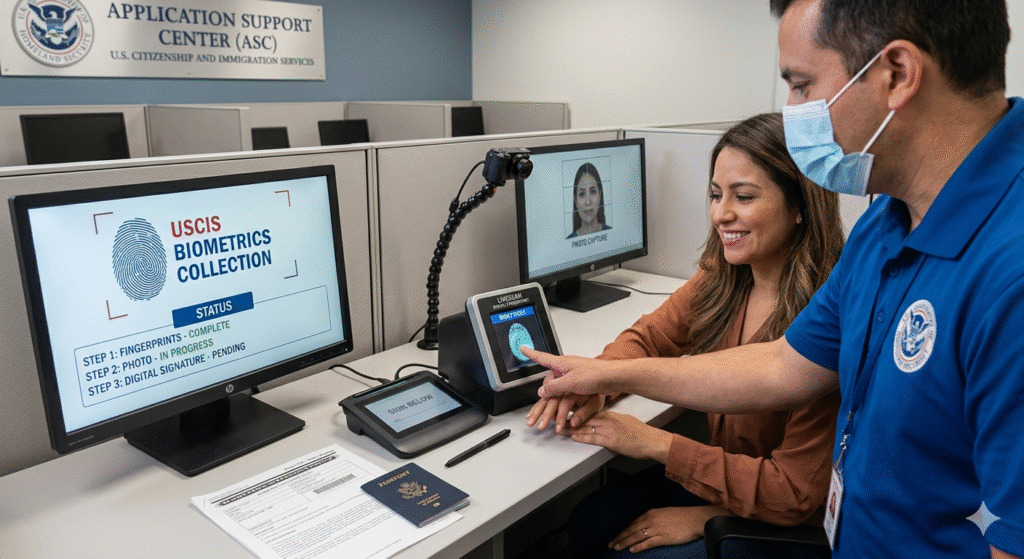
You walk out of your biometrics appointment thinking the hard part is over.
Your fingerprints were taken. Your photo was captured. USCIS now has your application.
So naturally, you expect the next update to come soon, but rather, nothing happens.
Weeks pass. Sometimes months. Your online case status barely changes. You start checking your USCIS account during lunch breaks, before bed, maybe even first thing in the morning hoping something finally updated.
For many Green Card applicants, this is the point where anxiety really starts to build, and at Your Green Card Lawyer, we regularly speak with people who ask why their Green Card is taking so long after biometrics, whether USCIS may have forgotten their case, and if they should be worried when there is still no interview scheduled.
The truth is, this quiet stretch between biometrics and the interview is one of the most misunderstood parts of the immigration process.
And in many cases, the silence is completely normal
What Happens After Biometrics in a Marriage Green Card Case?
After biometrics, USCIS begins a more detailed review of your Green Card application before deciding whether to schedule your interview.
For marriage-based Adjustment of Status applicants, this stage often includes:
- Security and background checks
- Review of your relationship evidence
- Verification of forms and supporting documents
- Internal case processing and interview scheduling
Even if your online account shows little or no movement, your case is still progressing behind the scenes.
This is the part many applicants never see.
One of the Biggest Misunderstandings About Biometrics
A lot of people assume biometrics means USCIS has almost finished reviewing their cases, in reality, biometrics is often the point where deeper review begins.
Once fingerprints and identity information are collected, USCIS can start running broader checks and reviewing your application more closely. This is why some applicants experience long periods without updates afterward.
According to experienced immigration attorney Justin Scott Kadich, this stage is often where immigration officers begin carefully reviewing the details of the case, not necessarily where approvals happen quickly.
What USCIS Is Actually Doing Behind the Scenes; Security and Background Checks
Even though the process feels invisible from the applicant’s side, several important things are usually happening internally. One of the key steps is that USCIS runs security and background checks using your biometrics to complete identity and security screening through different government systems.
This may include:
- FBI fingerprint checks
- Name-based background checks
- Immigration history review
- Security database screening
For many applicants, these checks move quietly in the background with no visible status updates online.
Officers Review Your Application and Supporting Documents
USCIS officers also begin reviewing the full application package you submitted.
In marriage-based cases, this may include reviewing:
- Form I-130
- Form I-485
- Marriage certificates
- Joint financial documents
- Photos and relationship evidence
- Affidavit of Support forms
Officers are generally looking for:
- Consistency
- Missing information
- Eligibility concerns
- Signs the marriage is legitimate
This is one reason strong documentation matters so much from the beginning.
Your Case May Be Waiting for an Interview Slot
After the initial review, many Adjustment of Status cases are transferred to a local USCIS field office for interview scheduling.
This is where timing becomes unpredictable.
Two couples can file around the same time and still receive interview notices months apart because local office workloads vary significantly.
Some field offices move faster than others. Some are heavily backlogged.
Unfortunately, applicants usually have very little control over this part of the timeline.
Why This Waiting Period Feels So Emotionally Draining
The uncertainty is what makes this stage difficult.
If USCIS sent regular updates saying: Your case is still processing normally.
Many applicants would probably feel far less stressed.
Instead, people are left trying to interpret silence.
That silence often leads to overthinking.
Many applicants start wondering:
“Did something go wrong?”
“Is my interview delayed?”
“Am I stuck in the system?”
“Why are other people getting approved faster?”
And once online forums and social media comparisons enter the picture, anxiety can grow quickly.
But immigration timelines are rarely identical.
A slower timeline does not automatically mean there’s a problem with your case.
How Long Does It Take to Get a Green Card Interview After Biometrics?
There’s no single timeline that applies to every applicant.
Some people receive interview notices relatively quickly. Others may wait much longer depending on:
- Their USCIS field office
- Overall case volume
- Staffing levels
- Requests for additional evidence
- Case complexity
This is why comparing your timeline to someone else’s can create unnecessary stress. Even when applicants fill in on a similar date, their experience and response can still differ.
Signs Your Green Card Case Is Still Moving Normally
One of the hardest parts of the waiting period is not knowing whether your case is progressing the way it should. While every case is different, there are a few signs that things are still moving in the right direction.
If your biometrics appointment was completed successfully, it confirms USCIS was able to collect and process your fingerprints and identity information. Many applicants also see their case status remain as “Actively Being Reviewed” for a long time, which usually does not mean something is wrong.
In some cases, applicants receive their work permit or travel document before an interview is scheduled, and in many situations, not receiving any serious USCIS notice at all is simply part of the normal process.
When You Should Pay Closer Attention to Delays
While waiting is common, there are situations where it makes sense to look more carefully at your case.
If your case has been pending much longer than expected compared to your field office’s usual timeline, it may be worth seeking guidance. Delays can also happen if you moved and did not update your address, which could cause you to miss important notices like your interview date.
Additionally, if you previously received a Request for Evidence (RFE) or had immigration complications such as prior denials or overstays, your case may require additional review. During this period you’re waiting for an interview, use this time to prepare for the next stage instead of feeling stuck.
Continue Building Relationship Evidence
For marriage-based Green Card cases, updated relationship evidence can be extremely important during the interview.
Helpful documents may include:
- Joint bank statements
- Lease agreements
- Insurance policies
- Photos together
- Travel records
- Utility bills
- Shared financial responsibilities
The more naturally your documentation tells the story of your relationship, the better prepared you may feel later and it is important to start Preparing for the Interview earlier than you may think.
Many couples wait until the interview notice arrives before preparing, This often creates unnecessary stress.
Reviewing possible interview questions early and organizing documents ahead of time can make the process feel much more manageable.
Stop Measuring Your Case Against Internet Timelines and Avoid Common Mistakes After Biometrics
This is easier said than done, but comparing your case to random timelines online usually creates more anxiety than clarity because every case moves differently. Many approved Green Card cases also go through long quiet periods before the interview is scheduled, so silence alone is not usually a warning sign.
Most applicants find themselves obsessively checking USCIS status updates, but refreshing your account several times a day rarely changes anything and often increases stress. It’s also important not to ignore small USCIS notices, since even routine mail can contain important information that affects your case. And if something genuinely feels unusual about your situation, asking questions early can help prevent bigger problems later.
The Silence After Biometrics Doesn’t Always Mean Something Is Wrong
The Silence After Biometrics Doesn’t Always Mean Something Is Wrong
For many applicants, this stage feels harder than expected because there’s so little visibility into what USCIS is actually doing.
But quiet periods are often part of the normal process.
At Your Green Card Lawyer, we understand how stressful immigration uncertainty can feel because we work with applicants navigating these exact situations every day. With extensive experience handling marriage-based and family-based Green Card cases, our team helps clients understand the process, prepare thoroughly, and avoid mistakes that can lead to unnecessary delays.
If you have concerns about your timeline or want guidance on what comes next, we’re here to help.
Conclusion
Waiting without updates is frustrating, no doubt about it. But it’s also one of the most normal parts of the immigration process.
If you’re in this stage, there’s a strong chance your case is moving forward even if you can’t see it yet.
And if you’d rather not sit with the uncertainty, getting a professional opinion can help you understand exactly where you stand and what to expect next
Frequently Asked Questions
How long after biometrics will I get my marriage Green Card interview?
There is no fixed timeline. Some applicants receive interview notices within a few months, while others may wait significantly longer depending on USCIS workload and local field office processing times.
Why has my USCIS case status not changed after biometrics?
This is extremely common. USCIS may continue processing your case internally without posting frequent updates to your online account.
Is it normal to wait several months after biometrics for a Green Card interview?
Yes. Many marriage-based Green Card applicants experience long waiting periods between biometrics and interview scheduling.
Does “Case Is Being Actively Reviewed by USCIS” mean approval is coming?
Not necessarily. It usually means USCIS is still reviewing different parts of your case and processing remains ongoing.
Why is my marriage Green Card taking so long after biometrics?
Delays can happen for many reasons, including field office backlogs, security reviews, staffing shortages, or requests for additional evidence.
Can USCIS deny my Green Card application after biometrics?
Yes, USCIS can deny applications if eligibility requirements are not met. Biometrics completion alone does not guarantee approval.
What should I do while waiting for my Green Card interview?
Use this time to gather updated relationship evidence, organize important documents, monitor USCIS notices carefully, and prepare for your interview in advance.
This information is for general educational purposes only and is not legal advice. Reading this page does not create an attorney–client relationship. Immigration laws change frequently, and your situation may require personalized guidance.
