
Trusted immigration legal services for families, couples, and professionals seeking permanent residency in the United States.

Common Reasons Green Card Application Get Denied (and How to Avoid Them)
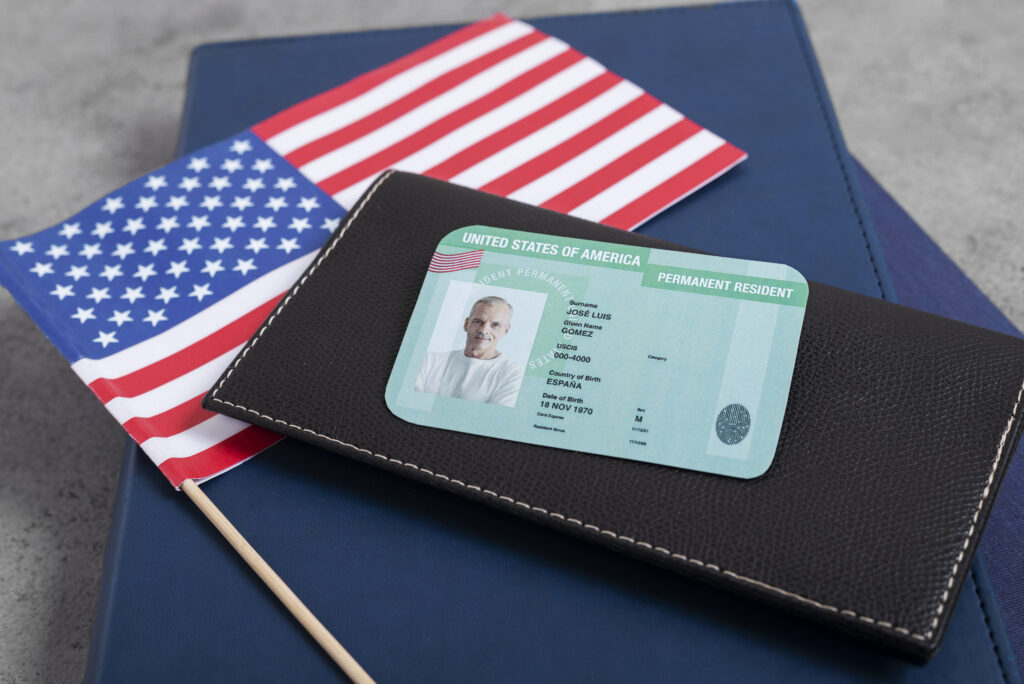
A green card denied outcome can often be managed and, in many cases, prevented when you understand how USCIS evaluates evidence and eligibility.
Applicants who know how their documents, history, and supporting proof are reviewed are far better positioned to avoid the issues that commonly trigger denials.
Many denials stem from avoidable problems such as missing records, weak evidence, inconsistent information, or mistakes in eligibility categories. In fact, a significant portion of denial situations arises from preventable errors rather than from true ineligibility.
This guide walks you through the most common and often overlooked reasons green card cases fail, how USCIS reviews applications, and the steps you can take to strengthen your case before filing, responding to an RFE, or preparing a re-submission.
Why a Green Card Denied Decision Can be Issued?
Many people first encounter the phrase “green card denied” when receiving a USCIS notice, but the underlying reasons typically follow predictable patterns.
USCIS decides by checking the legal requirements for each benefit and the evidence offered. If the applicant does not meet those requirements, USCIS must deny the application. USCIS also applies discretionary rules and admissibility checks, like health, criminal history, and national security.
Key ideas to keep in mind
- USCIS looks for facts that clearly match the rule.
- Documents must be reliable and consistent.
- Gaps, contradictions, and missing items make decisions harder and increase the chance of denial.
- Some issues can be fixed by submitting more evidence or filing a motion. Others require a new application.
The Most Common Reasons Greed Card Applications Get Denied
Each section explains what the issue is, why USCIS treats it seriously, and simple steps to prevent it.
1. Missing or Incomplete Required Evidence
USCIS needs documents that prove identity, status, relationship, finances, and other requirements.
If a required item is missing, USCIS cannot confirm your claim. Missing evidence is a top cause of requests for evidence and denials.
What applicants often miss
- Certified birth or marriage certificates.
- Final divorce decrees.
- Proof of lawful entry or maintenance of status.
- Translations certified to be accurate.
- Tax transcripts and pay stubs for sponsors.
What to do
- Use the official checklist for your filing category.
- Provide USCIS-certified translations for any document not in English.
- Label each document and show what it proves.
- If USCIS issues an RFE, answer it fully and on time.
Short scenario
A spouse filed a marriage-based adjustment and forgot to include the spouse’s divorce decree from a prior marriage. USCIS issued a denial because it could not confirm legal capacity to marry. The case could have been avoided by adding the decree at filing.
2. Incorrect or Inconsistent Information on Forms
Conflicting names, dates, or facts across forms and documents.
USCIS relies on consistency. Discrepancies raise doubts and may trigger further review or denial.
Common examples
- A birth date that differs on the passport and the birth certificate.
- Different spellings of names across forms.
- Prior visa history was entered incorrectly.
What to do
- Make a timeline of your dates and events.
- Cross-check every form field.
- Ask a second person to read all filings for obvious mistakes.
Short scenario
An applicant listed a different employment end date on the I-485 and on a supporting employer letter. The dates did not match during review. The mismatch led to extra scrutiny and ultimately an adverse finding about eligibility. Careful checking would have avoided the problem.
3. Not Meeting Eligibility Requirements
The evidence does not meet the legal rule for the category you used.
USCIS applies specific standards for marriage-based, family-based, and employment-based filings. If the facts do not meet the standard, the application must be denied.
Examples and fixes
- Marriage-based: Lack of proof of a shared life. Fix: show joint finances, leases, photos, and affidavits.
- Employment-based: The job offer does not match the petitioned classification. Fix: supply detailed job descriptions, contracts, and payroll records.
- Family preference: Insufficient proof of qualifying relationship. Fix: provide birth records, adoption papers, and consistent family trees.
What to do
- Map each legal requirement to a piece of evidence.
- Do not assume a single document proves multiple requirements. Provide direct proof for each point.
4. Failure to Attend a USCIS Interview or Biometrics Appointment
Missing a scheduled interview or biometrics session without following USCIS rescheduling rules.
Biometrics and interviews are required steps for many applications. Failure to appear can halt processing and lead to denial.
How to avoid it
- Track notices closely.
- Update your address with USCIS.
- Request rescheduling before the appointment and explain the reason. USCIS provides rescheduling options; follow the instructions on the notice.
What to do if you miss a date
- Contact USCIS immediately and document your efforts to reschedule.
- If you receive a denial, you may be able to explain the missed appointment in a motion if you have a valid reason.
5. Insufficient Financial Sponsorship (Form I-864)
Sponsors must meet the federal poverty guideline for household size and submit proof, like tax returns and pay stubs.
USCIS needs to see that the sponsor can support the applicant so the applicant will not rely on public benefits. The affidavit of support is legally binding in many ways.
Common issues
- Sponsor income below the required level.
- Missing tax transcripts.
- No joint sponsor when needed.
What to do
- Check the applicable poverty guideline for the filing date. Include Form I-864P reference materials.
- Submit tax transcripts rather than only copies of returns.
- Use a joint sponsor if the principal sponsor does not meet the guidelines.
Short scenario
A sponsor used a recent job offer letter rather than solid pay records. USCIS found the income reliable and denied it. The sponsor could have included W-2s and recent pay stubs to show actual income.
6. Problems With the Medical Exam (Form I-693)
The medical report must be completed by a USCIS-designated civil surgeon and follow the CDC technical instructions for a civil surgeon.
USCIS reviews the exam to check public health grounds of inadmissibility. If the form is expired, incomplete, or not done by a designated civil surgeon, USCIS can reject it.
How to avoid it
- Use a designated civil surgeon listed on USCIS.
- Bring complete vaccination records to the appointment.
- Confirm that the surgeon signs all required fields.
- File the form within its validity window.
7. Previous Immigration Violations
History of overstays, unauthorized work, or prior orders of removal.
USCIS evaluates past compliance to determine admissibility. Some violations make the applicant inadmissible unless a waiver applies.
What to do
- Be honest on forms. Do not hide past violations.
- Provide documentation that explains the circumstances.
- Seek legal guidance on waivers if applicable.
Short scenario
An applicant who overstayed a prior visa did not disclose it. USCIS discovered the overstay through records and denied for inadmissibility. Full, honest disclosure and supporting documents could have allowed evaluation for a waiver.
8. Criminal History Issues
Convictions or certain arrests can affect admissibility.
USCIS reviews the nature of the offense, the date, and the sentencing to decide admissibility. Some offenses are strictly disqualifying.
What to do
- Get your certified court records and final dispositions.
- Summarize outcomes clearly for USCIS
- Seek legal help for strategy and possible waivers.
9. Marriage-Based Specific Concerns
USCIS closely examines whether a marriage is bona fide.
Key proof items
- Joint financial accounts and tax returns.
- Joint lease or mortgage.
- Photos showing shared life across time.
- Affidavits from friends or family with specific details.
What to do
- Organize a packet of documents that shows daily life and shared responsibilities.
- Be ready for consistent answers at the interview.
Short scenario
A couple married recently and submitted a marriage certificate with minimal additional evidence. USCIS questioned the relationship’s legitimacy and denied it. A fuller packet of joint records would likely have prevented the outcome.
How USCIS Reviews Evidence After a Green Card Denial
If you receive a green card denied notice, understanding how USCIS weighs evidence can guide your next steps.
USCIS applies a practical test – does the documentary record, taken as a whole, clearly establish the claim? They do not accept vague statements. They look for direct proof. That means a strong file is organized, specific, and redundant in useful ways. Use multiple documents that point to the same fact.
Understanding how USCIS evaluates documents is one of the best ways to avoid a green card denied decision caused by weak or unclear evidence.
Evidence Tips Based on Your Green Card Application Means
Marriage-Based Applicants
Show the reality of your daily married life. Include joint bank accounts, leases, household bills, insurance policies, children’s records, and photos or social proof that demonstrate an ongoing marital relationship.
Employment-Based Applicants
Provide detailed job descriptions, the official job offer, labor certification (if required), payroll or tax records, and evidence showing the employer can pay the offered wage.
Family-Based Applicants
Submit clear birth, adoption, or legal guardianship records. Make sure the documents directly prove the qualifying family relationship.
Adjustment of Status (AOS) Applicants Inside the U.S.
Track your immigration history carefully. Include proof of lawful entries, I-94 records, prior USCIS notices, work authorization documents, and any travel records.
Consular Processing Applicants
Follow all Department of State instructions closely and bring original civil documents to your embassy or consulate interview.
Self-Diagnosis Checklist (Quick Way to Access Risk)
Answer these yes/no items. If you answer no to any, your risk of denial may be higher.
Documents and forms
- Did I use the current USCIS forms?
- Are all names and dates consistent across every form and document?
- Do I have certified translations for non-English documents?
- Do I have original or certified copies of birth, marriage, or divorce records?
Evidence strength
- Do I have two or more documents that prove each key fact?
- Do I have tax transcripts and pay records for sponsors?
- Does the medical form come from a USCIS-designated civil surgeon?
Process and appointments
- Have I scheduled and prepared for biometrics and interviews?
- Did I follow the rescheduling instructions if I missed a date?
History and disclosure
- Did I disclose all prior stays, removals, arrests, or applications?
- Can I provide court records for any criminal history?
If you answered no to any item, collect the missing items before filing or consult a green card lawyer.
What to Do Next When Your Green Card Denial Notice Arrives
When your green card denial arrives, the next steps depend on the reason in the denial notice.
Here is a clear roadmap:
- Read the denial notice. It will state the legal and factual bases.
- Request your USCIS file (FOIA/G-639). Seeing the file helps you decide the next step.
- Determine options: Refile with corrected evidence, file a motion to reopen or reconsider, or appeal if allowed. Deadlines apply.
- If the denial is narrow and factual, consider a motion with new evidence.
- If the denial involves admissibility, check waiver eligibility.
- Seek a qualified green card lawyer’s help for complex histories or criminal matters.
Short scenario
A denial listed missing tax transcripts and insufficient sponsor income. The applicant obtained the transcripts and refilled the I-864 with a joint sponsor. The second filing advanced to the interview.
When to Get Legal Help
Consult a green card lawyer if you have:
- Criminal convictions.
- Prior deportation or removal orders.
- Complex immigration history.
- Multiple denials.
- Conflicting or unclear records.
A green card lawyer can explain options, deadlines, and the probability of success. No attorney can guarantee approval. Use legal help to clarify strategy and reduce avoidable mistakes.
Conclusion
Denials often result from missing evidence, inconsistent facts, missed steps, or failure to meet legal rules. This article laid out what matters, how USCIS evaluates claims, and clear steps to reduce risk. If your case has complexities, professional guidance can clarify the right path.
Frequently Asked Questions
Can green card holders be denied entry to the United States?
Yes. Even if you have a valid green card, U.S. border officers can deny entry if they believe you abandoned your residency, committed certain crimes, stayed outside the U.S. too long, or engaged in immigration fraud. Always carry proper documentation and be prepared to answer questions about your travel history.
Why would a green card renewal be denied?
Common reasons include missing documents, unpaid fees, criminal issues, prior immigration violations, or providing inaccurate information on Form I-90. Ensuring accuracy and including all required evidence greatly reduces the chance of denial.
Can a pending green card renewal cause travel problems or denial upon re-entry?
Yes. If your green card renewal is pending and you travel without proper proof of your current status such as the I-90 receipt notice with extension you may face delays or, in rare cases, denial of entry. Always check USCIS rules before traveling.
What should I do if my green card application is denied?
You generally have three options: file a motion to reopen/reconsider, submit a new application correcting the issues, or appeal (if eligible). Understanding the reason for denial is essential before choosing the best path forward.
Can CBP deny entry to a green card holder with a criminal record?
Yes. Certain criminal convictions, even old ones, can make a lawful permanent resident “inadmissible.” This can lead to detention, secondary inspection, or denial of entry. Consulting an immigration attorney before traveling is strongly recommended if you have a criminal history.
This information is for general educational purposes only and is not legal advice. Reading this page does not create an attorney–client relationship. Immigration laws change frequently, and your situation may require personalized guidance.
Ready to Start Your Green Card Journey?
Get personalized guidance from an experienced green card lawyer.